reportager
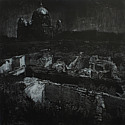
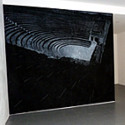
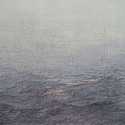
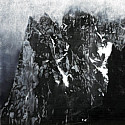
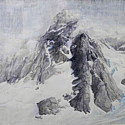
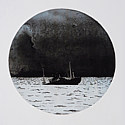
| members Emma Stibbon As a visual artist my research is driven by a response to place realised through drawing. Often large-scale, I produce my work through a range of process including woodcut, large-scale drawings and intaglio print. I aim to suggest a sense of the strength, resilience and yet ultimate fragility of place. For me the act of drawing has almost magical qualities, allowing me to connect the physical with memory. Working within a context of place and a changing environment, I seek out locations that are in dynamic flux or change. Whether this is man-made such as buildings in a state of demolition or abandonment, quarried landscape or through the forces of nature such as geologically changing or glacially eroded landscape the subjects are connected by their sense of scale or drama. Much of my work is derived through travel. My interest in landscape and its histories has taken me to diverse locations, from local environments to the remote regions of Antarctica. My interest is focused on how the apparently monumental can be so fragile. A central concern in my work focuses on how the process of drawing can inform a critical response to place. The realisation of an image, for example my use of chalk on blackboard, a fragile medium that is easily wiped away, can both render an image and act as metaphor. On closer examination of the image it’s traces and erasures also act as a reminder of human mark making. This contingent relationship between landscape and memory underlies the process, I aim to seek out and capture the elusiveness of the subject through the materiality of the work. In recent work I have focused on the dynamics of the built landscape and how place can be read as a layering of historical traces. Looking at cities that have undergone dramatic shifts, I am interested in how the appearance of a city can retain the structures and patterns of its history. In an ongoing project I have been looking at the city of Berlin where this is particularly evident, having experienced the political and social extremes of the C20. The inevitable decline and renewal of utopian planning is apparent and is imprinted on the city’s monumental street plans and buildings. A recent project looks at Rome, focusing on the axis between ancient Rome and Mussolini’s Fascist plans for the city. My interest was focused on looking at the simultaneous periods of time, mainly the sites of ancient Rome, and how Imperialist architecture was later appropriated to lend credibility to new regimes. The shadow of classical antiquity cast on Western civilization ominously stretches into present times. Through an approach of site based research and visual practice I seek to question our perception and experience of environment as immutable and resilient. At the heart of my work I am concerned with whether drawing can present both a metaphor and visual space for reflection and engagement with contemporary changes to our surroundings and environment.  stibbe@blueyonder.co.uk Websites:  http://arts.brighton.ac.uk/staff/emma-stibbon www.roomartspace.co.uk/artist_detail.php?ID=16&theartist=EMMA%20%20STIBBON www.land2.uwe.ac.uk www.upstairs-berlin.com/en/kuenstler/emma-stibbon/ |
|